Why Founders Winning Rounds in 2026 Bet on Remote Teams (and How to Do It Right)
Discover why founders winning rounds in 2026 bet on remote teams. Learn the execution playbook from YC, a16z, and top distributed companies.

Why Founders Winning Rounds in 2026 Bet on Remote Teams (and How to Do It Right)
“In 2026, remote isn't a compromise—it's the winning strategy.”
The debate is over. The data is in. Founders who successfully raise Series A and B in 2026 disproportionately run remote or distributed teams. Not because remote is trendy, but because it delivers velocity, efficiency, talent access, and capital discipline that top VCs explicitly reward.
This guide breaks down why remote teams are a fundraising superpower in 2026, backed by real patterns from YC, a16z, Sequoia, and Paul Graham's thinking. You'll get the exact playbook winning founders use, common pitfalls to avoid, and a clear comparison of how to execute it without management headaches.
Whether you're pre-seed, raising now, or post-raise scaling, mastering this narrative turns your team structure from a potential red flag into a valuation driver.
The 2026 Remote Reality: Data from Top VC Portfolios
Remote and distributed teams are no longer the exception—they're the norm among high-performing startups.
- Y Combinator: Over 40% of recent batches run distributed or global-first teams. YC partners repeatedly say: “Team size does not equal progress. Remote enables velocity with less burn.”
- Andreessen Horowitz (a16z): Multiple unicorns in their portfolio (e.g., global SaaS and AI companies) operate fully remote. a16z operating playbooks emphasize: “Distributed teams are superior when communication is elite and ownership is clear.”
- Sequoia Capital: Dozens of portfolio companies are global-first, with leadership in US/EU and execution talent in LATAM, Eastern Europe, and Asia. Sequoia notes in founder letters: “Access to the best people, wherever they are, is a competitive moat.”
- Other signals: Levels.fyi and AngelList data show remote job postings for Series A/B startups receiving 2–3x more qualified applications than onsite-only roles.
Paul Graham's timeless insight (paraphrased):
“Startups don’t die from being remote. They die from unclear thinking and slow execution. Remote teams amplify clarity—which is why bad founders avoid them.”
The pattern is clear: Founders who win rounds treat remote as strategic leverage, not a cost-saving hack.
What Winning Founders Do Differently in 2026
These are the repeatable habits that separate founders closing big checks from those getting passed.
1) They Document Everything Obsessively
“If it's not written down, it doesn't exist.” — YC mantra
Winning teams live in Notion, Confluence, or Linear. Every decision, spec, async update, and process is documented.
Why it matters for fundraising: VCs ask “How do you communicate?” A strong doc culture proves maturity and scalability.
Real example: A YC W25 company built a public “Playbook” Notion page shared in pitch decks—VCs loved the transparency and clarity.
2) They Hire Self-Directed Seniors First
Remote amplifies both autonomy and confusion. Juniors struggle without hand-holding; seniors thrive.
Winning founders prioritize:
- 5+ years experience
- Proven async track record (GitHub history, past remote roles)
- Self-starters who write RFCs and ship without daily standups
Avoid: Hiring juniors early to “scale cheap”—it creates management overhead that kills velocity.
a16z playbook: “Hire people who can manage themselves and others remotely.”
3) They Create Timezone Overlap Intentionally
No more “24/7 team” myths. Winning founders design for overlap:
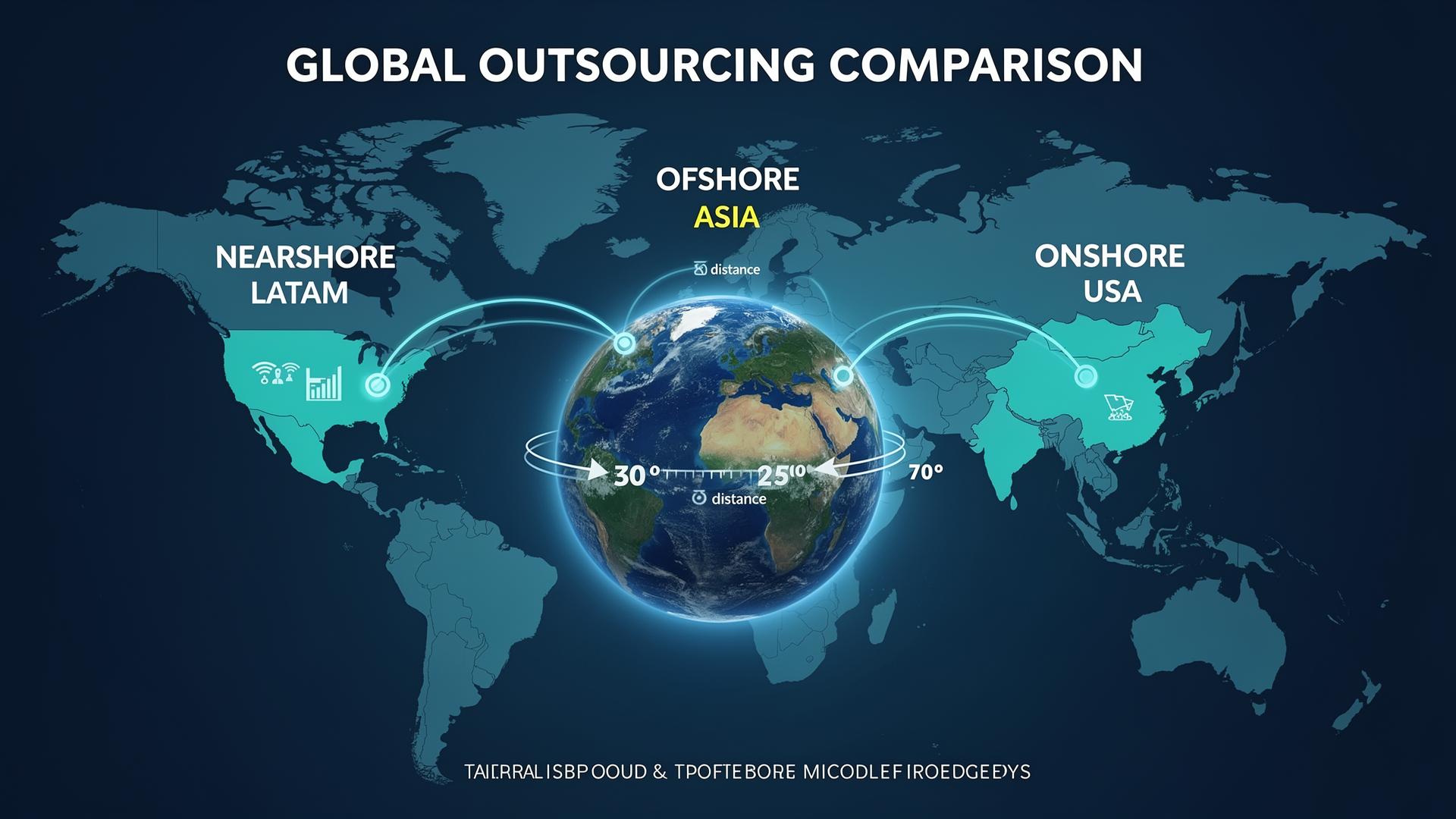
- LATAM (Argentina, Mexico, Colombia): 1–5 hour overlap with US East/West Coast—same-day Slack/Loom collaboration.
- Eastern Europe (Ukraine, Poland): 6–8 hour overlap—ideal for morning US handoffs.
- India/SEA: Night-shift for US morning coverage (used selectively for support/ops).
Best practice: Core team overlap 4+ hours/day. Tools like World Time Buddy and Calendly enforce it.
4) They Use Async as a Superpower, Not a Crutch
Meetings for decisions, not status updates.
Winning rituals:
- Async video updates (Loom) instead of daily standups
- Written RFCs for features (Linear/GitHub Discussions)
- “No-meeting Wednesdays” for deep work
- Weekly all-hands (recorded) for alignment
Result: 30–50% more engineering output per headcount (internal benchmarks from remote-first companies).
5) They Frame Remote to VCs as Leverage, Not Cost-Cutting
Never say: “Remote saves us money.”
Say:
“We're strategically distributed: leadership near market, execution accessing senior global talent with elite async systems. This gives us velocity, efficiency, and depth without premature fixed burn.”
This phrasing checks every VC box: capital efficiency, talent access, execution maturity.
Biggest Remote Red Flags VCs Spot in 2026 (and How to Avoid Them)
-
“Remote didn't work for us before” → Translation: Poor management.
Fix: Highlight refined processes. -
No mention of async tools or documentation → Signals chaos.
Fix: Show your stack in deck. -
Over-promising “office culture” perks → Avoids remote reality.
Fix: Emphasize ownership and results. -
Hiring juniors en masse remotely → High churn risk.
Fix: Start with seniors.
Platform Comparison: How to Build Your Winning Remote Team in 2026
Many founders try to DIY remote hiring. Here's a realistic 2026 comparison focused on fundraising startups:
| Platform/Service | Talent Quality | Time to Hire | Cost Structure | Full-Service (Sourcing + Management) | Async/Remote Expertise | Overall Rating for Winning Founders |
|---|---|---|---|---|---|---|
| HiresLink | Senior vetted (5+ yrs exp) | 2–3 weeks | Lowest effective (bundled) | Yes – full handling | Built-in (proven async playbooks) | ⭐⭐⭐⭐⭐ |
| Toptal | Good (vetted devs) | 3–4 weeks | High markups | Partial | Moderate | ⭐⭐⭐ |
| Andela | Good (Africa/LATAM focus) | 4–6 weeks | High | Partial | Good | ⭐⭐⭐ |
| Upwork/Fiverr | Variable | 1–2 weeks | Per-hour (escalates fast) | No | Low | ⭐⭐ |
| LinkedIn Recruiter | High (direct) | 4–8 weeks | Subscription + high salaries | No | None | ⭐⭐⭐ |
| Deel/Remote.com | N/A (payroll only) | N/A | Per-employee fees | Payroll/compliance only | None | ⭐⭐⭐ (for compliance) |
Why HiresLink is the choice for founders winning rounds:
- Lowest total cost with senior, vetted global talent (LATAM/EE focus)
- Full-service: sourcing, vetting, onboarding, async training, ongoing management
- Built for startups: Flexible contracts → easy absorption to cap table
- Proven with YC/a16z-backed companies—signals discipline to investors
Step-by-Step: How to Implement a Winning Remote Strategy This Quarter
- Audit Current Team: Identify gaps in async skills. Run a “documentation health check.”
- Define Your Geography Mix: Leadership local-ish, execution global with overlap.
- Build Your Async Stack: Notion + Slack + Loom + Linear (minimum viable).
- Hire Your First Remote Senior: Use vetted partner like HiresLink—target 2–3 week close.
- Document Your Playbook: Create a 1-pager “How We Work Remotely” for pitch decks.
- Test & Iterate: Run a 30-day async trial with new hire—measure output.
Case study: A Series A fintech (a16z-backed) switched to a LATAM execution team via HiresLink—cut burn 45%, doubled engineering velocity, closed round 20% above target valuation.
Final Framing Script for Investor Conversations
Use this verbatim in your deck or calls:
“We're strategically distributed: leadership aligned to market, execution accessing senior global talent with elite async systems. This gives us 24/7 velocity, capital efficiency, and depth—proven by our documentation culture and senior-first hiring.”
Ready to Build Your Winning Remote Team?
The founders who win big rounds in 2026 aren't debating remote vs onsite—they're executing distributed teams with discipline and clarity.
If you want to access senior global talent fast, without the sourcing grind or management overhead, let's talk.
At HiresLink, we specialize in building high-velocity remote teams for fundraising startups—handling everything so you focus on closing and scaling.
Last updated: February 2026
About HiresLink Team
Expert insights from the HiresLink team on hiring LATAM tech talent, remote work, and building distributed teams.
Table of Contents
Related Articles

Ready to Hire Top LATAM Talent?
Get matched with pre-vetted developers, designers, and specialists in 48 hours.