How to Present Your Remote Hiring Strategy to VCs Without Raising Red Flags (The 2026 Definitive Guide)
Learn how to pitch your remote hiring strategy to VCs in 2026 without raising red flags. Proven language shifts, YC & a16z-backed advice, and execution tools to

How to Present Your Remote Hiring Strategy to VCs Without Raising Red Flags (2026 Guide)
In 2026, building a remote or global team is no longer a nice-to-have for startups—it's a competitive advantage. Yet many founders still stumble when presenting their remote hiring strategy to venture capitalists during fundraising. One wrong phrase can trigger doubts about quality, execution risk, or capital efficiency.
The good news? Top funds like Y Combinator (YC), Andreessen Horowitz (a16z), and investors influenced by Paul Graham actively support distributed teams—when they're framed correctly.
This guide breaks down exactly how to pitch remote hiring to VCs in 2026 without raising red flags. You'll get proven language shifts, step-by-step playbooks, investor-backed references, and practical tools to execute your strategy.
Whether you're raising Seed, Series A, or beyond, mastering this narrative can directly impact your valuation and close speed.
Why VCs Care About Your Remote Hiring Strategy in 2026
VCs aren't anti-remote. They're anti-sloppy execution.
In a post-2025 funding environment, investors prioritize:
- Capital efficiency: Getting more output with less burn
- Access to top talent: Especially in AI, engineering, and GTM roles
- Scalability with discipline: Proving you can grow headcount without exploding payroll
A strong remote hiring strategy signals all three. A weak one screams "quality risk" or "management issues."
Founders who frame global talent as strategic leverage close rounds faster. Those who sound like they're "cutting costs" get grilled—or passed.
The Critical Language Shift Every Founder Must Make
Never say: "We're hiring cheaper talent abroad."
VCs hear: Cost-cutting → lower quality → higher risk.
Instead say: "We're accessing senior global talent with strong ROI and timezone alignment."
VCs hear: Capital-efficient operator → elite execution → higher upside.
Here’s a quick comparison table:
| What NOT to Say | What TO Say | Why VCs Love It |
|---|---|---|
| "We hire cheaper talent abroad" | "We access senior global talent with strong ROI" | Signals efficiency, not desperation |
| "Remote saves us money on salaries" | "Distributed teams give us 24/7 velocity" | Focuses on output, not cost |
| "We're going fully remote to cut costs" | "We're global by design with elite async systems" | Shows intentionality and maturity |
| "Remote didn't work for us before" | "We've refined our async processes for clarity" | Turns weakness into strength |
Use these phrases verbatim in your pitch deck and investor conversations.
What Top Funds Actually Recommend About Remote Teams
Y Combinator (YC)
YC's advice is explicit in their Bookface posts and partner interviews:
- Hire slowly pre-raise
- Prefer contractors early to prove velocity
- Avoid fixed payroll explosions
- Premature full-time hiring is a top post-raise killer
YC backs dozens of global-first companies and emphasizes: team size ≠ progress.
Andreessen Horowitz (a16z)
a16z operating playbooks highlight:
- Distributed teams are fine—and often superior—with elite communication
- Founders who master async management are stronger operators
- Clear ownership per function is non-negotiable
They routinely invest in global-first organizations.
Paul Graham
Paraphrased from his essays:
"Startups don’t die from being remote. They die from unclear thinking and slow execution. Remote teams amplify clarity—which is why bad founders avoid them."
Step-by-Step: How to Build and Present Your Remote Hiring Strategy While Raising
Step 1: Freeze Ego Hires
Ask two questions before any role:
- Does this hire increase revenue or velocity in <90 days?
- Or does it just make the org chart look bigger?
If it's the second, skip it. No "Head of People" or "VP of Marketing" just to impress investors.
Step 2: Present a Post-Raise Hiring Roadmap (Not Current Hires)
VCs love this sentence:
"We'll deploy capital into strategic hires once milestones are hit, not before."
Example roadmap:
- Months 0–2: Validate GTM with core team + flexible contractors
- Months 3–5: Scale execution roles (engineering, design, customer success)
- Month 6+: Internalize key functions and convert proven contractors
This shows discipline and optionality.
Step 3: Use Geography Strategically
Best-in-class framing:
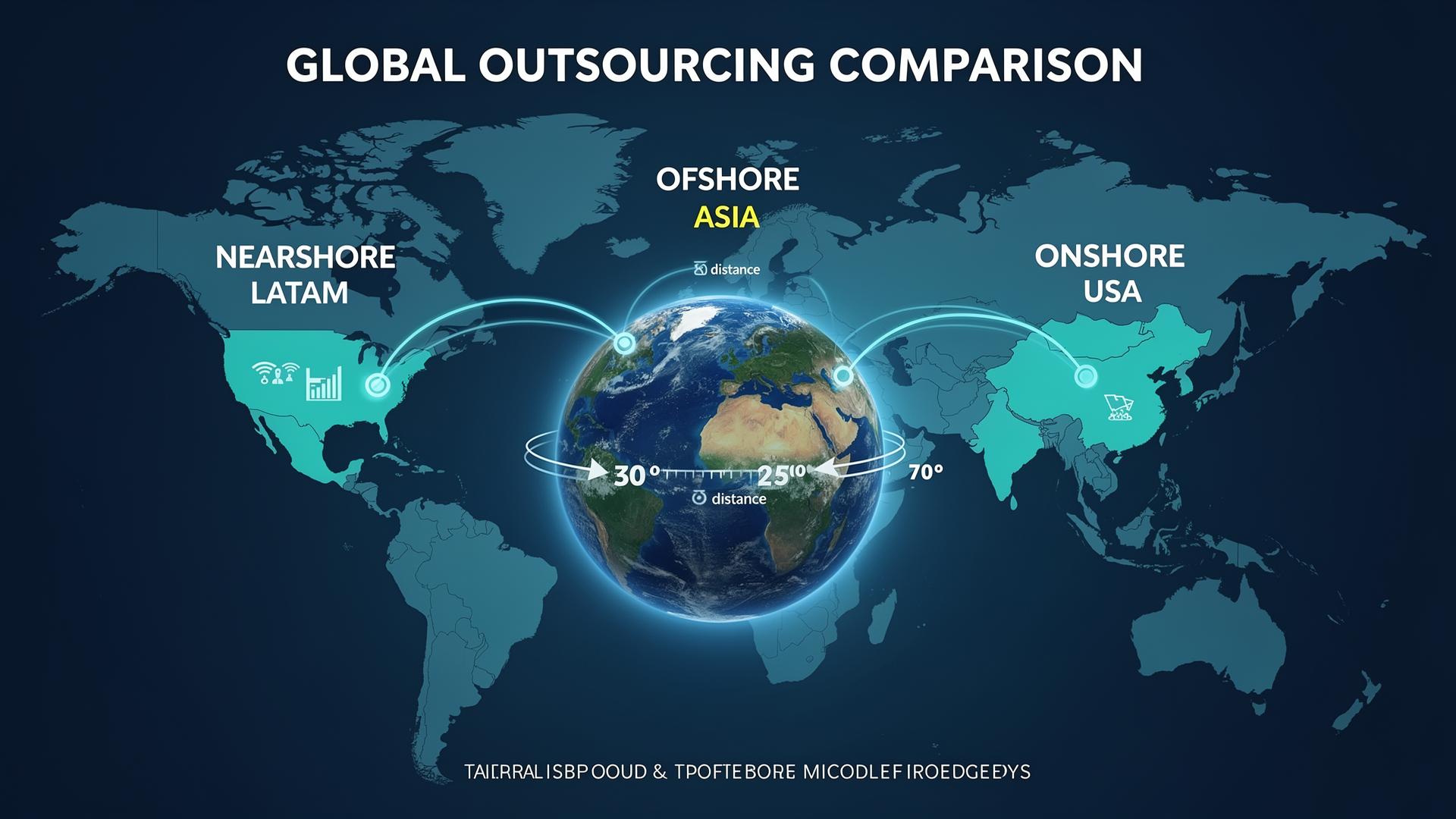
- Leadership & GTM roles: Close to core market (e.g., US/Europe)
- Execution talent: LATAM or Eastern Europe for timezone overlap and depth
- Systems: Elite onboarding, QA processes, and async tools (Notion, Slack, Loom)
You're global by design—not necessity.
Biggest Remote Hiring Red Flags VCs Spot Immediately
Avoid these phrases—they trigger instant concern:
- "We’re going to hire a big team right after the raise"
- "We need to build culture first, then scale"
- "Remote didn’t work for us" (translation: management problem)
- Over-hiring before clear PMF
Platforms and Services Comparison: How to Execute Your Global Strategy in 2026
Many founders use platforms to source remote talent. Here's an honest comparison focused on startups raising in 2026:
| Platform/Service | Best For | Cost Structure | Handles Payroll/Compliance? | Future Absorption (Contract → Full-Time) | Overall for Fundraising Startups |
|---|---|---|---|---|---|
| HiresLink | Full-service remote team building for startups | Lowest effective cost (vetted talent + managed service) | Yes, fully handled | Seamless transition built-in | Best choice – signals maturity and efficiency |
| Upwork/Fiverr | Freelance tasks | Per-hour/project (can escalate) | No | Difficult/manual | High management overhead |
| LinkedIn Recruiter | Direct sourcing | Subscription + high salaries | No | Possible but slow | Expensive for global scale |
| Andela/Toptal | Vetted developers | Premium pricing | Partial | Limited | Good quality, higher cost |
| Deel/Remote.com | EOR/payroll only | Per-employee fees | Yes | Not their focus | Compliance only, no sourcing |
Why HiresLink stands out for fundraising founders:
- Lowest total cost of ownership (vetted senior talent without premium markups)
- Full-service handling: sourcing, vetting, onboarding, and ongoing management
- Built-in flexibility: Easily absorb top performers into your cap table later
- Proven with YC and a16z-backed companies raising in tight markets
Using a partner like HiresLink signals to VCs that you're a disciplined operator who prioritizes velocity over micromanagement.
Final Framing Script for Investor Conversations
Use this verbatim:
"We're building a lean, global team with strong ownership and clear metrics. We prioritize speed and capital efficiency, and we only convert roles to fixed cost once ROI is proven."
That single sentence checks every VC box.
Ready to Implement This Strategy?
The founders who win rounds in 2026 aren't the ones hiring fastest—they're the ones who keep optionality longest while accessing the best global talent.
If you want to execute this remote hiring strategy without spending months on sourcing and vetting, let's talk.
At HiresLink, we specialize in building high-velocity remote teams for fundraising startups. We handle everything—so you can focus on closing your round and hitting milestones.
Book a free strategy call: hireslink.com/call
Your next hire shouldn't raise red flags—it should raise your valuation.
About HiresLink Team
Expert insights from the HiresLink team on hiring LATAM tech talent, remote work, and building distributed teams.
Table of Contents
Related Articles

Ready to Hire Top LATAM Talent?
Get matched with pre-vetted developers, designers, and specialists in 48 hours.